
By Xavier Kataquapit
First Nation youth representatives are letting the world know that Indigenous people are ready to stand up and protect the land.
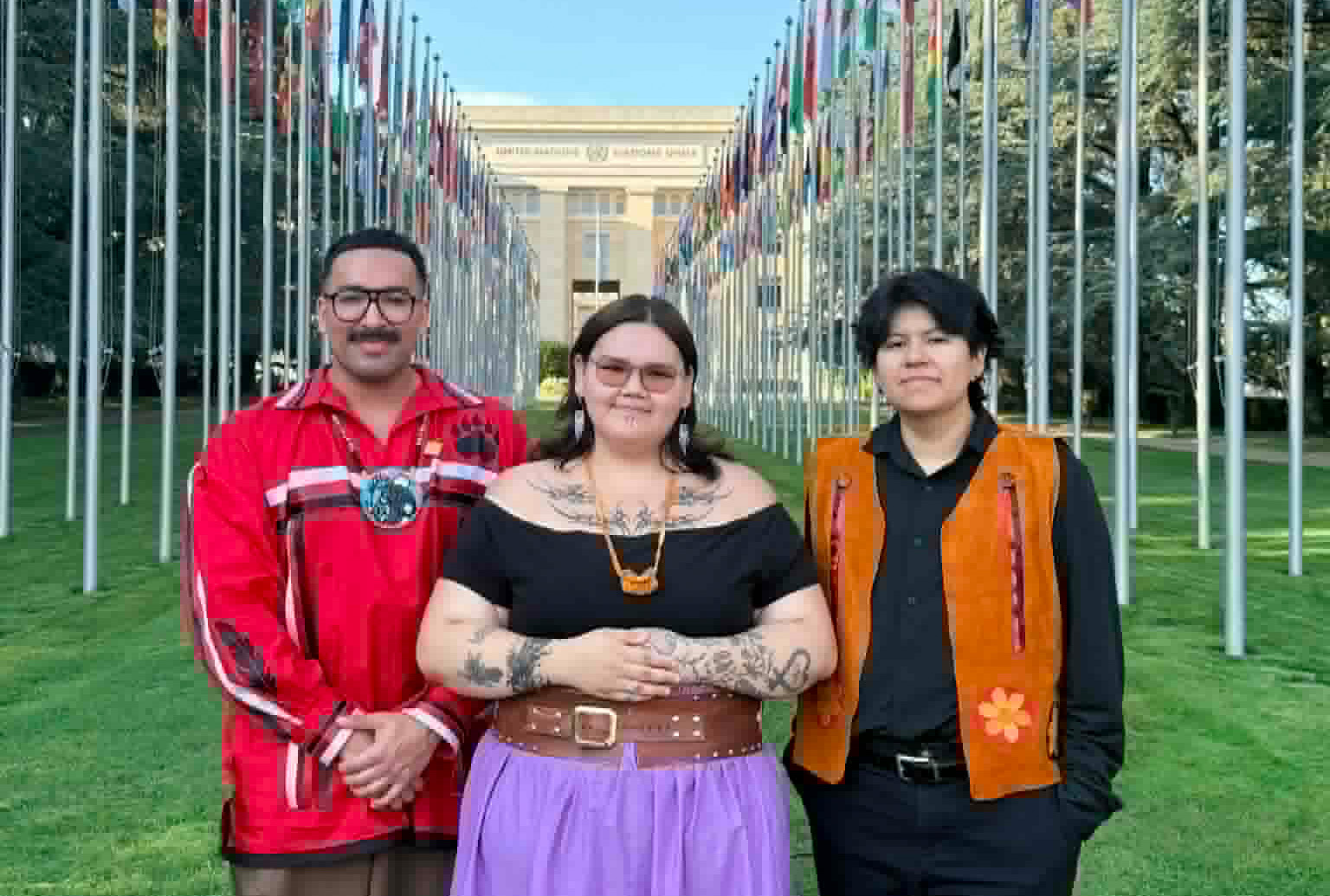
Keira Spence, Kohen Mattinas and Ryan Fleming are attending the United Nations Expert Mechanism on the Rights of Indigenous Peoples (EMRIP) in Switzerland. This special gathering began its 19th session on July 13 and ends today, July 17, at the Palais des Nations in Geneva.
The UN Expert Mechanism on the Rights of Indigenous Peoples (EMRIP) was established to assist member UN states and Indigenous communities in the implementation of the United Nations Declaration on the Rights of Indigenous Peoples (UNDRIP).
It carries out this mission through research studies, country engagements and annual forums every July. The annual July event provides a platform for Indigenous representatives, advocates and state governments to meet, debate and voice human rights concerns directly to the United Nations.
Although EMRIP has no authoritative power, its studies and advice are widely regarded as authoritative interpretations of UNDRIP. Canada is one of many countries that follow EMRIP guidance to draft local laws and stay informed by its reports.
This is the second international UN forum for these First Nation youth representatives. They previously attended the UN Permanent Forum on Indigenous Issues (UNPFII) held at the United Nations headquarters in New York in April. Kohen Mattinas and Fleming attended that event with Jeronimo Kataquapit and Ramon Kataquapit as part of a First Nation youth delegation.
This time in Geneva, Kohen, Ryan and Keira were able to attend as independent First Nation youth representatives through the support of Nishnawbe-Aski Nation (NAN). Although they received some financial support, they had to fund much of their own travel expenses.
At 25 years of age, Kohen of Lac Seul and Constance Lake First Nations, had always taken an interest in First Nations youth issues but it was the summer of 2025 during the introduction of Ontario’s Bill 5 and Canada’s Bill C-5 that made them take on a more prominent and active role in advocating for environmental protection and Indigenous rights. Ontario’s Bill 5 and Canada’s Bill C-5 have galvanized Indigenous land defenders due to their displeasure with these legislations that aim to fast-track mining development and directly affect the lives and futures of First Nations.
Kohen believes it is important for them to attend these international forums, especially one from which Canada directly seeks advice and guidance. As Kohen explained, “the most important thing for me is in strengthening Indigenous jurisdiction so that we can have more control of our lives and our future. We need to find our own power and regain our Indigenous jurisdiction because, if we don’t, Canada and its levels of government will always have the underlying authority over everything we do”.
Ryan, of Attawapiskat First Nation, a doctoral student at the University of Toronto, brings a wealth of knowledge and training in political science studies, as well as experience in federal government research and policy roles. At 34 years of age, he explained that his background has provided a perspective on Canadian institutions and politics that has greatly assisted their youth delegation at these international events.
I had a chance to speak to Ryan and he was happy to be taking part in this forum where they could mix with other Indigenous groups from around the world facing similar situations. He reminded me that historically First Nation leaders often worked cooperatively to achieve their goals and that is how they are working together to share ideas and offer unique perspectives as academics, youth leaders and grassroots organizers, drawing on their backgrounds of living on reserve, off reserve or in urban environments.
Keira, of Moose Cree First Nation, is the youngest member of their group at 20 years of age and she was happy to take part in the delegation. She is an artist and land defender who is also a cofounder of Okiniwak, a First Nation youth movement also founded by Kohen and Ramon Kataquapit. She comes from a family of leaders, including her great aunt Chief Theresa Spence of Attawapiskat First Nation.
Keira delivered an intervention at the UN EMRIP forum, which was a short presentation delivered to the gathered international audience. She was excited and proud to be taking part in this event. She explained that she wanted to empower youth and felt a great need to represent her community, her territory and especially Indigenous youth on matters as important as the future of the land they call home.
I was greatly impressed by these young representatives, as their advocacy and bravery reminded me of the work of First Nations leaders in northern Ontario in the 1970s and 1980s. Their grassroots initiative and drive to make First Nations heard reminded me of people like Andrew Rickard, who helped found the Nishnawbe-Aski Nation, or people from my home community of Attawapiskat like Fred Wesley or Elder Emile Nakogee, who took it upon themselves to represent, advocate and speak for our people.
Kohen, Ryan, Keira, Jeronimo and Ramon are a new generation of grassroots Indigenous leaders and it makes me proud to know that they are working hard to represent our people as best they can. They are doing an amazing job because they are making the world listen.
Top Photo: Nishnawbe-Aski Nation First Nation Youth Delegation at the UN Expert Mechanism on the Rights of Indigenous Peoples (EMRIP) in Gevena, Switzerland are from L-R: Ryan Fleming of Attawapiskat First Nation; Keira Spence of Moose Cree First Nation; and Kohen Mattinas of Lac Seul First Nation/Constance Lake First Nation. Photo provided by Kohen Mattinas.