
Image
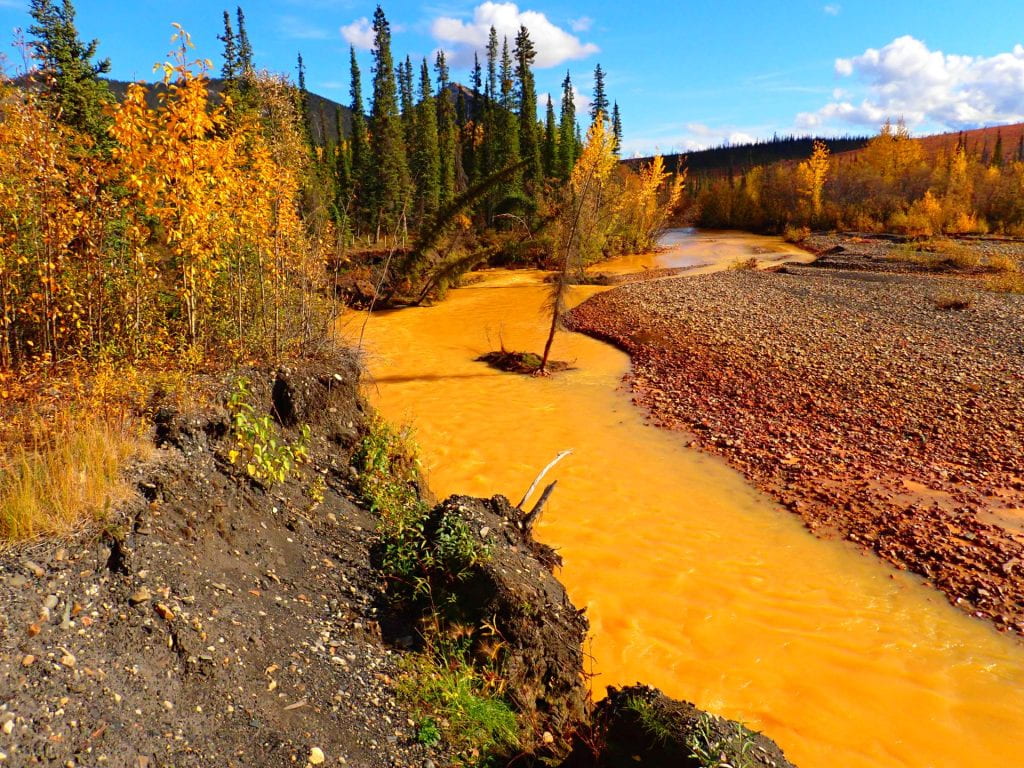
Image Caption
Local Journalism Initiative Reporter
Windspeaker.com
Facing devastating climate-fuelled impacts to their rivers and wildlife, Yukon First Nations are increasingly mobilizing to intensify monitoring research.
The territory's water chemistry has been changing over the last 20 years, with drastic shifts in the past few years that have been causing greater alarm.
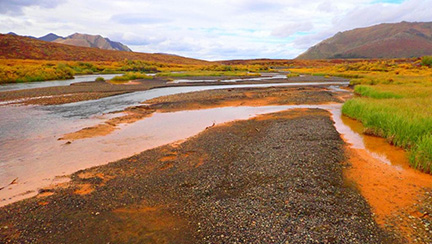
Growing evidence indicates that thawing permafrost is turning rivers and streams to a milky or bright orange colour with an acidic slime that appears to significantly alter the aquatic habitat.
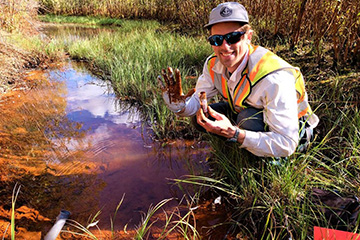
“Streams we were monitoring north of Dawson City totally turned on us as we were sampling them,” said Elliott Skierszkan, lead author of a recently published study on the phenomenon. “It's been a rapid unwinding in the last two or three years that local people have also noticed. How could you not notice these streams and rivers have, all of a sudden, turned orange?”
Having long researched the potential of climate change to release sulphide minerals locked in the ground since the Ice Age, the assistant professor at Carleton University speculated that river “rusting” could become an issue.
These concerns were validated through collaborative monitoring with land guardians from the Tr’ondëk Hwëch’in First Nation, who were already conducting their own studies into river changes.
Research has focused on the Tombstone Territorial Park, a protected area created from the Tr’ondëk Hwëch’in land settlement agreement, where headwaters feed the First Nation's streams and fisheries. The region sits between the Yukon and Mackenzie river basins, the largest free-flowing rivers in North America.
The Blackstone River, which follows the Dempster Highway north of Dawson City, has begun changing colour in the last couple of years, along with its tributary streams. While satellite imagery reveals this patch of dead vegetation has been growing since 2015, the water is crystal clear upstream.
“We hiked with some folks from the (Tr’ondëk Hwëch’in) land guardian unit to some good fish spawning habitats along the Blackstone and did some water sampling,” Skierszkan recalled. “We measured the pH in a tributary stream of the Blackstone that receives acidic water and is milky and cloudy. Upstream of the acidic seepages, they were just floored: ‘Wow, the water is really clear up here’.”
The researchers had located the source of acidic water, a very small catchment basin with a huge effect on aquatic chemistry. Over this past summer, the research team collected several hundred additional samples in Tombstone Territorial Park and along the Dempster Highway corridor to better delineate the spatial extent of rusting.
Skierszkan suggested that thousands of formerly pristine streams across the North American northwest may have abruptly become highly toxic since 2024, with concentrations of metals and sulphur sometimes worse than tailings ponds at the most contaminated mining sites. This recent phenomenon has been well documented across Alaska, indicating that groundwater is flowing in new pathways opened by thawing permafrost.
“The geology includes rocks from marine sediments of what was, hundreds of millions of years ago, the shore of North America,” explained Skierszkan. “These deeper sea sediments forming sulphide minerals remain stable when there's no oxygen or water interacting with them. It's complex – not all the rocks in that area will contain that geological recipe.”
As global warming hits the Arctic, an estimated two to three times faster than elsewhere on the planet, the loss of ice is exposing naturally occurring sulphide minerals to weathering at a greater rate. With similar effects observed from melting glaciers in Europe and South America, Skierszkan is working with researchers around the world to better understand the consequences and areas of higher risk.
Larger downstream rivers haven't yet experienced a significant drop in water quality. Further studies will help determine how far downstream from these acidic catchments that the water quality improves. Yukon Parks is increasingly involved in monitoring as the region is popular with backcountry hikers, who frequently draw drinking water from the streams.
The Yukon River Inter-Tribal Watershed Council (YRITWC), comprised of 73 First Nations and Alaskan Tribes, has been monitoring waters along the river's 3,186 km shoreline since 1997. The monitoring season is launched with a workshop in Whitehorse each spring, where participants receive training and tools to measure pH, temperature, dissolved oxygen and conductivity.
“We’re providing communities with reports that describe these long-term changes over time,” said YRITWC science director Edda Mutter. “All the knowledge that’s being gathered is a tool for the tribes and the First Nations to be stewards of the land and water.”
A growing focus is testing samples for trace metals like aluminum, cadmium and iron to help understand how thawing permafrost and mining sites are impacting water quality. The data provides important guidance for ecosystem restoration, particularly for conservation efforts regarding plummeting salmon populations.
Alaskan researchers recently linked rusty rivers to spawning habitat degradation for the Dolly Varden salmonid species. Juvenile fish have disappeared in some tributaries, and the phenomenon is believed to be a contributing factor in the devastating collapse of the Chinook salmon, whose numbers are now less than 10 percent of their 1980s population.
An annual project to rescue fish stranded in ponds on Tr'ondëk Hwëch'in traditional territory found only four salmon this summer, compared to over a thousand in past years. A few years ago, To Swim and Speak with Salmon was formed to empower, primarily, Indigenous youth in salmon advocacy and related cultural teachings in the Yukon River basin.
“Historically, there would be huge 70-pound salmon coming all the way to Whitehorse, about a 3,000 km swim up the river,” said the organization's director Jared Gonet of the Taku River Tlingit First Nation. “It would be a massive community thing, bringing youth and Elders together every year, sharing stories about salmon. A couple of years ago, it was looking like they might become extinct.”
Named after the traditional story of a boy who is turned into a salmon after showing disrespect and returns to teach others what the fish has taught him, the organization aims to keep this vital spiritual connection alive. As youth lead, Nika Silverfox-Young of Little Salmon Carmacks First Nation asked, “If we don’t have salmon, are we still Little Salmon people?”
“Sometimes the youth feel they don't have a space to come together to heal and speak out,” Gonet explained. “How do we keep calling salmon back? They're going to come back as long as we keep remembering and respecting them, as the stories tell us to do.”
Placer mining, which has dredged up riverbeds to sift for gold, and a toxic leak at Victoria Gold's Eagle mine in 2024, have been disastrous for salmon. The latter event inspired a salmon and water ceremony that To Swim and Speak with Salmon commemorates each year.
Ocean trawling, parasites, pollution and dams are other salmon stressors. Tr’ondëk Hwëch’in Chief Darren Taylor has been a leader in the movement to grant legal personhood to the Yukon River, an initiative that has led to dam removal in other regions. As investigations into the region's rusty rivers continues, the First Nation is a prominent partner.
To Swim and Speak with Salmon has been training young leaders from a medicine wheel perspective and participating in cultural events. On Aug. 21, they celebrated Salmon Appreciation Day at the Whitehorse Fish Ladder, hosting discussions around watersheds and “our salmon relatives.”
“Without healthy waters, we're not going to have healthy salmon,” Gonet asserted. “We need to protect our rivers as they've been protecting us for generations. That's been our journey in some ways, becoming part of the water.”