
Image
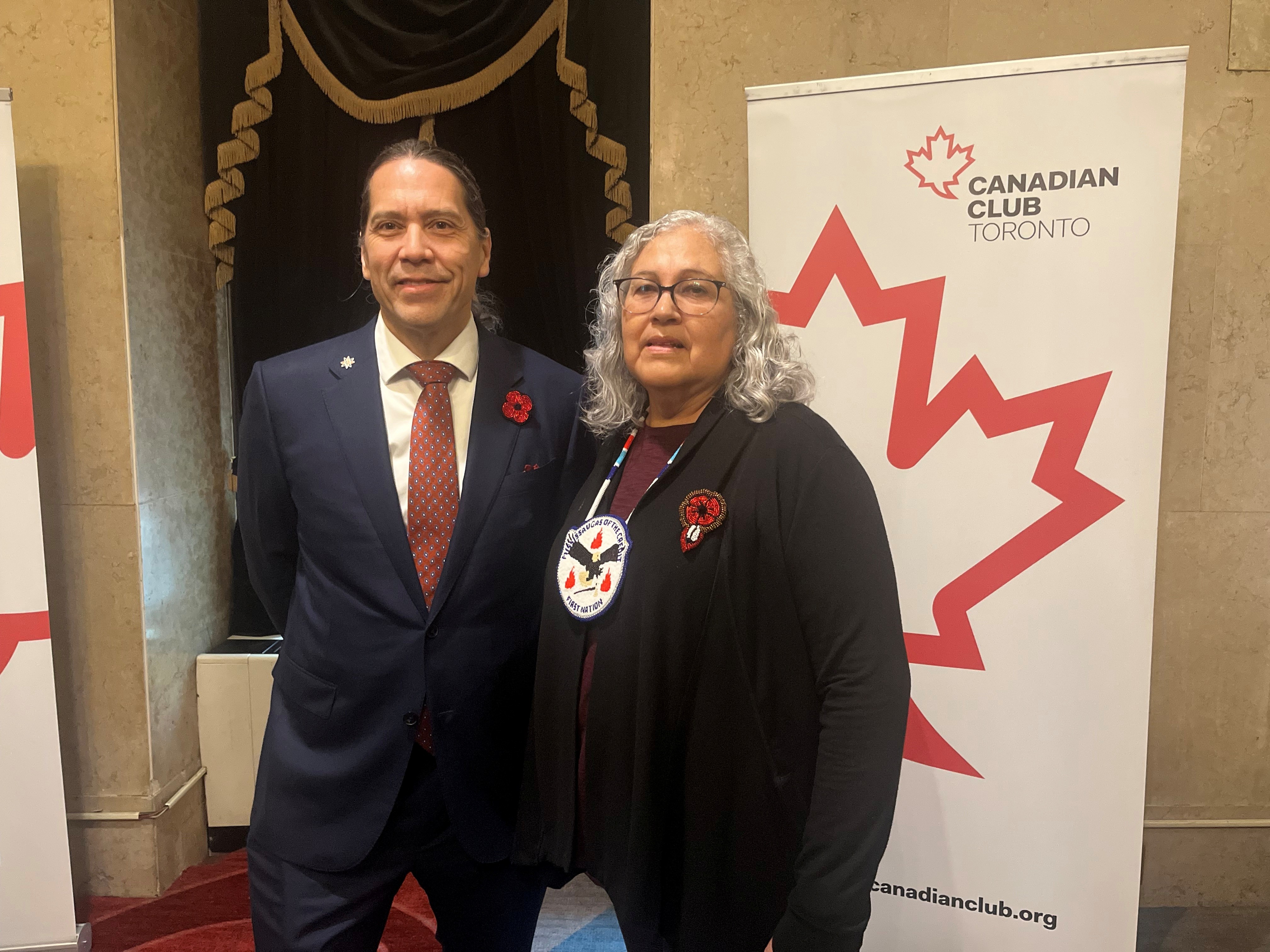
Image Caption
Windspeaker.com
The First Nations Bank of Canada (FNBC) has completed a $50 million capital raise thanks in part to a large investment from a First Nation in southern Ontario.
At a downtown Toronto event on Nov. 4, it was announced that Mississaugas of the Credit First Nation (MCFN) has invested $15 million into the FNBC, Canada’s only Indigenous-owned chartered bank.
With its investment, MCFN now has about a 10 per cent ownership in the FNBC.
The FNBC, which was established in 1996, currently operates 22 branches and services centres spread across six provinces and three territories. The bank manages more than $1.625 billion in assets.
Bill Lomax, who serves as the FNBC’s president and CEO, said the bank’s latest capital raise will open further opportunities. It not only returns money into Indigenous communities but also gives them a voice.
“This is really an important part of what we do,” he said. “The capital makes a big difference for us. That is really important.”
For every dollar of equity capital the bank raises, it can then lend between $8 and $10, said Lomax. Raising $50 million will have plenty of impact.
“That makes a big difference in how much we can lend to the communities that we work with. And if we didn’t get that capital, we would have had to say ‘Pencils down, we can’t lend anymore’,” Lomax said.
First Nations across the country are involved in numerous initiatives.
“It was critical,” Lomax said of the capital raise. “And this is a good thing. We were running up against the fact that the Nations are moving so fast. We needed the capital to make sure that we could continue to support all of that.”
Lomax said the FNBC is in a position that is unique.
“If you think about the other banks, they lend into the Indigenous economy,” he said. “We were built by the Indigenous economy. We are embedded in Indigenous country, part of it.”
Larry Sault, a former MCFN chief who now serves as a councillor for the First Nation, joined in for the investment announcement held during a luncheon at Canadian Club Toronto.
“I keep saying to our community, we can't be a Nation without an economic engine,” Sault said. “We cannot be a government without a strong income for seven generations. Banks think in quarters. We think in generations. We have to think longer than that.”
Sault hopes his First Nation will have other significant announcements in the near future. He is confident MCFN will capitalize on a number of opportunities that exist with several initiatives.
“I'm not satisfied with local,” he said. “I want to be on the international (stage). I want to go big. And, of course, my years are getting up there. So, we have to do it real quick.”
MCFN is adjacent to Six Nations of the Grand River, Canada’s largest First Nation, and near the Ontario city of Brantford.
With both provincial and federal governments keen to work on major projects, Sault believes it would be prudent for MCFN to play a key role with some of these ventures.
“I think we really need to take front and centre stage on a lot of these issues happening within the (Greater Toronto Area) and across the country,” he said.
MCFN’s current chief, Margaret Sault, also attended the investment announcement.
“It makes good sense,” she said.
She said her First Nation has incorporated an approach that will benefit seven generations, an Indigenous way of thinking.
“We want to build wealth for the long term,” she said. “I think the vision is there. And I think we're building that by being an owner. We're not just a customer.”
The chief also said the deal will give her First Nation a larger presence in Toronto. This is something that previous MCFN councils had sought.
The First Nation’s investment into the FNBC will have plenty of positive spinoffs, including the fact MCFN will be able to decide its future the way its officials deem best.
“I see it as a great opportunity because we are a prosperous First Nations,” she said.
Chief Sault dreams of the day her First Nation becomes self-sufficient and not have to rely on government support.
“I want to bring us over that dependency where we can take our rightful place in the business world,” she said.