
Image
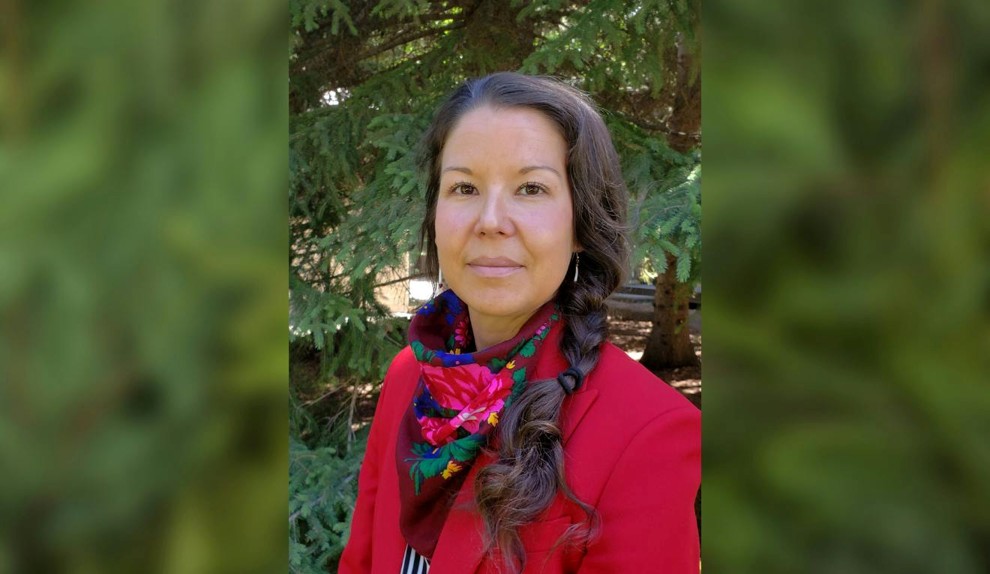
Image Caption
Local Journalism Initiative Reporter
Windspeaker.com
Calgary’s TELUS Spark Science Centre is bringing Indigenous scientists, astronomers, researchers and knowledge keepers together for Indigenous Science Night: Stones, Stories & Stars.
The evening of Oct. 16 will feature hands-on activities, telescope observations and community conversations that highlight Indigenous relationships to astronomy, mathematics and the natural world.
From 5 p.m. to 11 p.m. at 220 St. George's Drive NE, the centre will “share the depth of knowledge and science within stories that connect land with the cosmos,” said Kori Czuy, director and special advisor for Indigenous science connections.
The event is free to First Nations, Métis and Inuit guests, and for non-Indigenous visitors, the centre is offering reduced rates of $10 for adults and $5 for children.
Czuy (Cree/Métis/Polish) was born in Treaty 8 territory by the banks of the Peace River. She is focused on bringing together multiple ways of understanding scientific knowledge.
Her Ph.D is in storying mathematics. Through her research, she has worked with Treaty 7 Elders to explore the depth of mathematics within Indigenous stories.
Czuy is on a journey to reconnect with, and learn from, “knowings” of the land, as well as helping others connect with the complexities of these knowings through Western science.
She has been collaborating with Dr. Laurie Rousseau-Nepton. The Innu professor with the University of Toronto was the first Indigenous woman in Canada to earn a Ph.D in astrophysics.
Together, Rousseau-Nepton and Czuy have organized the Stones, Stories & Stars event.
“We’re looking at these ancient stone circles and how these different sites, sometimes called medicine wheels, are connected with the stars … We're trying to connect the different stories with alignments,” said Czuy. She says that some alignments tracking cycles go back as far as 26,000 years.
Czuy explained how the combination of math and stories allows science to gather further knowledge about the history of Indigenous science.
“There’s a balance of mathematics, the trigonometry, as well as connecting that with the stories and knowledges that we’ve heard, that I’ve heard, over many years of doing this work through different Elders,” Czuy said.
“We have a big map of a stone circle map, and you get to figure out how to align these to different North Stars or to planets or to the moon, and you can do that science,” Czuy said of an activity planned for visitors to Spark.
Czuy said 10,000 years ago, when the earth’s axis was slightly different, Vega was the North Star whereas today it is Polaris.
“So, if there’s a story about that star (Vega) being the North Star, then think about how far back these stories and these communities go in connection with this land,” she said.
Speakers will not only explore ancient astronomical alignments, but also dark-space knowledge and blackholes. Activities are designed to bring Indigenous scientific knowledge to life for visitors. The premiere of “Blackholes: Knowledges from the Dark” in the portable planetarium will showcase how many Indigenous communities around the world knew the significance and location of the blackhole at the centre of our universe.
The evening will feature a diverse group of Indigenous scholars and knowledge holders, including renowned astronomer and author Wilfred Buck of the Opaskwayak Cree Nation; Dr. Greg Cajete, a Tewa scholar; Dakota astronomer and physicist Jim Rock; and Dr. Alvin D. Harvey, a Diné space ecologist and systems engineer.
Other participants include Muckleshoot Nation knowledge keeper and cedar weaver Hanford McCloud, Blackfoot astronomer Rob Cardinal, Red River Métis scholar-artist Dr. Danielle Lussier and metaphysics philosopher Jessica Heim. Local Elders and community members will also contribute.
There will be a moonlight market with various Indigenous items to purchase for the upcoming holiday season, as well as land-inspired food.
“It's welcome to everyone, all people, all nations, all ages,” Czuy said. “There's no lectures. You get to do the Indigenous science,” she added.
For more information about the event visit Stones, Stories, & Stars - INDIGENOUS SCIENCE NIGHT - OCTOBER 16, 2026