
Image
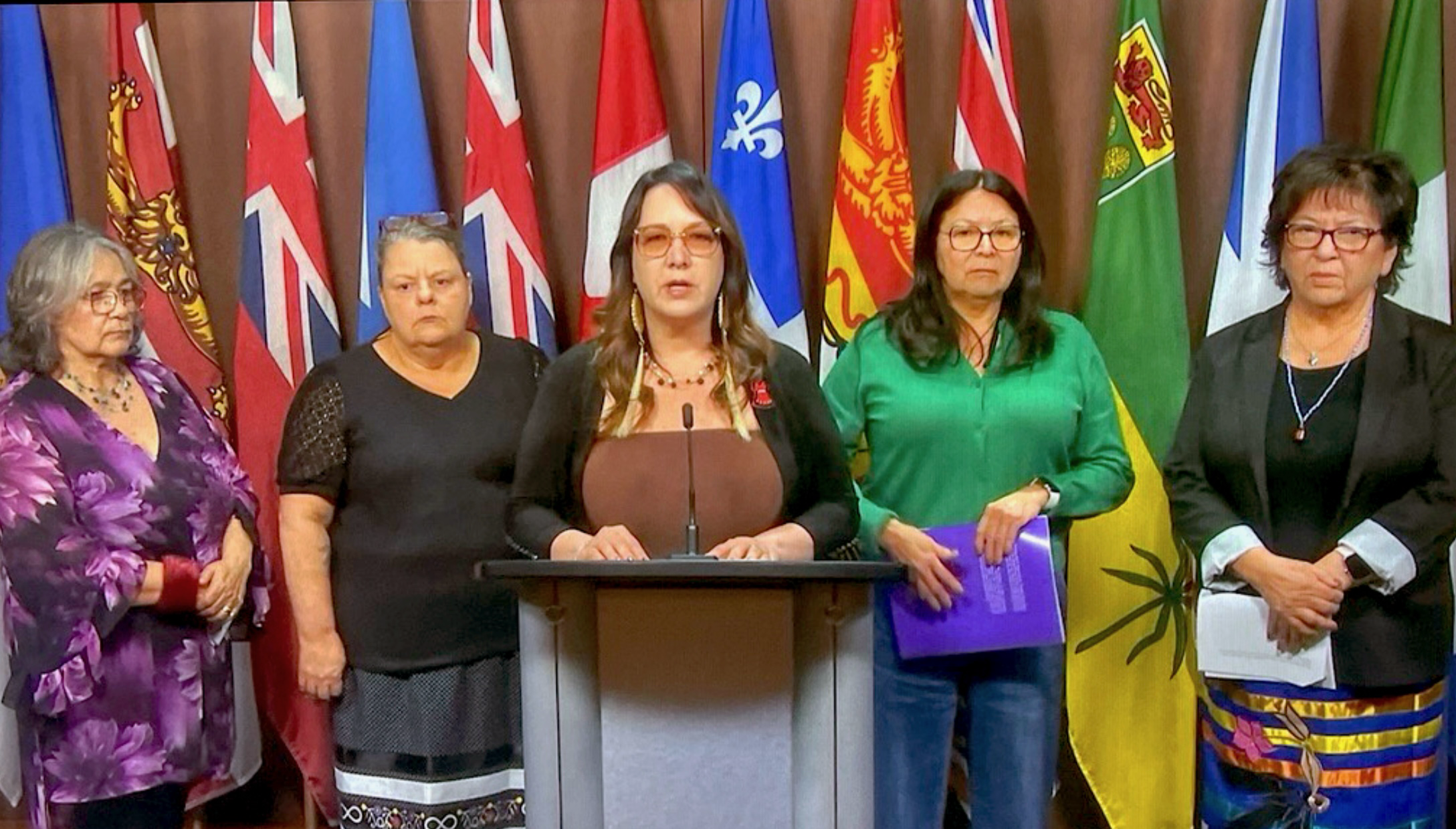
Image Caption
Local Journalism Initiative Reporter
Windspeaker.com
Correction Nov. 16 at 3:30 p.m. EST: The correct spelling of the CEO of the Ontario Native Women’s Association is Cora McGuire-Cyrette. We incorrectly spelled her last name and we apologize for our error.
Indigenous women’s groups from across Canada are upset with the 2026 federal budget, which was released on Nov. 5.
Leaders say the needs of Indigenous women are being ignored, with no mention of funding for programs that target the violence perpetrated against them and community supports they require.
At a press conference on Nov. 12 in Ottawa, women’s leadership demanded a meeting with Prime Minister Mark Carney.
“Our initial analysis, using the government's own gender-based analysis tool, indicates that Budget 2026, once again, primarily benefits men,” said Cora McGuire-Cyrette, CEO of the Ontario Native Women’s Association (OWNA).
McGuire-Cyrette said numerous reports have been written about why funding is required to combat violence faced by Indigenous women and the support systems needed across the country.
“And we're still not enacting any of those recommendations right now when it's most critical,” McGuire-Cyrette said.
“This is a constant advocacy, a constant strategy that we bring to the relevant tables through our policy papers and through our research and meeting with ministers, meeting with assistant deputy ministers, appearing at the Senate and writing letters and increasing awareness,” said Josie Nepinak, president of the Native Women’s Association of Canada (NWAC). “And that includes everything from vigils on the street to bring awareness to the issues…
“We believe that we are still not being heard at the levels where transformative change can happen. And that is why we are asking for a meeting with the prime minister.”
Nepinak said the advocacy strategy for NWAC will remain the same, with frequent collaboration with other Indigenous women’s groups “to develop a collective strategy to tackle the issues of the budget and particularly safety for Indigenous women and girls.
While there was much lacking in Budget 2026, there was one bright spot, an announcement that Canada would spend $3.6 million to renew Red Dress Alert, a pilot program to address the crisis of missing and murdered Indigenous women and girls.
“It was nice to see that investment there,” McGuire-Cyrette said. “However, it's for the aftermath of violence. And, we're not seeing those upstream investments.”
Nepinak praised the renewal of the program.
“The Red Dress (program) is part of it; a huge part of it,” she said. “But there are many other pieces that continue and require the work that is needed to improve the lives and to reduce the rate of violence, to reduce the rate of homicide and femicide in this country.”
Nepinak said the renewed Red Dress Alert project will save lives.
“However, that doesn't fix or that doesn't address all of the gaps that continue to exist,” she said.
In pre-budget meetings, Indigenous women’s groups had discussed the needs for funding in areas including housing and emergency and crisis support services, said Nepinak.
“We know that access to language, cultural and support services are not as much as they should be,” she said. “And we know that culturally responsive services continue to lack in programs and services across this country.”
While waiting for the response, if any, that will come from federal officials, McGuire-Cyrette said OWNA leaders will continue doing the advocacy work they’ve been doing.
“We're looking to change the legacy here,” she said. “And we're not going to stop. And we really do want to have a meaningful relationship with this government. And this begins with our prime minister. We want to work with him, to build Canada strong.
“And we want to continue to be able to do that, to be able to bring forward solutions, not just to say ‘Here's an issue, someone should do something about it.’ We're stepping up.”
McGuire-Cyrette said it is up to Indigenous women’s groups to lead the way.
“It's up to us to change this story,” she said. “And I think this is the opportunity we have right now. And we're going to continue to push, to build these tables ourselves if we need to. We just really want to build to do this in concert with what our country is doing… we can't leave anyone behind.”