
Image
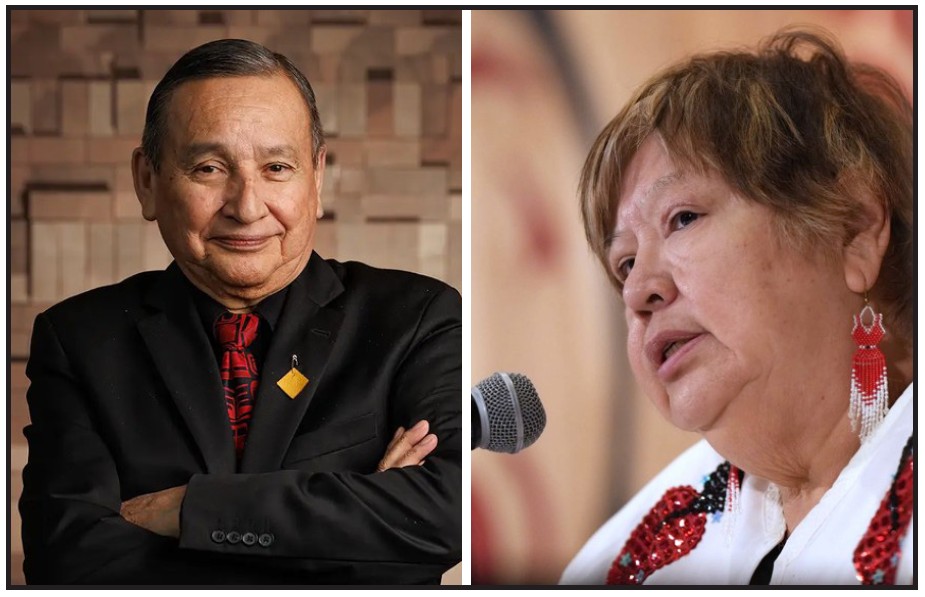
Image Caption
Local Journalism Initiative Reporter
Windspeaker.com
Indigenous people have long called for greater accountability following police-involved deaths, misconduct and concerns that existing oversight systems have failed to deliver justice to them.
Governments have responded with inquiries, commissions and reviews. Police agencies have introduced reforms. Yet Indigenous leaders say many of their people continue to find complaints processes intimidating, difficult to navigate and disconnected from their lived realities.
Now, rather than waiting for broader systemic change, First Nations in British Columbia are building their own support system.
The BC First Nations Justice Council (BCFNJC) officially launched its Police Accountability Unit (PAU) on June 10.
Available to Indigenous people across B.C., the unit provides free Indigenous-led legal advice and representation for police complaints, human rights matters, civil litigation and other accountability processes involving the RCMP, municipal police, and other law enforcement agencies.
The unit began as a pilot project in 2024 after First Nations communities called for support. Since then, it has handled more than 220 files, demonstrating what the BCFNJC says was a real need rather than a hypothetical one.
“The unit is needed to fill a gap that has been identified by rights holders in BC,” said Judith Sayers, the BCFNJC’s director responsible for policing and oversight. She is also president of the Nuu-chah-nulth Tribal Council.
“The PAU ensures Indigenous people in BC who experience police violence, misconduct, or negligence can access legal support and guidance to navigate the existing oversight and accountability mechanisms in a culturally safe way without financial barriers,” said Sayers.
The unit does not investigate allegations against police or replace B.C.’s established oversight bodies. Rather, it is an independent legal service funded by the Law Foundation of British Columbia that helps Indigenous people navigate those systems.
Lawyers will advise people about their legal rights, assist in filing police complaints or human rights tribunal applications, commence civil litigation where appropriate, and help them understand the options available to them after interactions with police.
BCFNJC heard that the colonial oversight systems were intimidating, complex, and culturally unsafe for Indigenous people to navigate and utilize, Sayers said. “The PAU has been created as a mechanism to support Indigenous people in BC who need to access those systems.”
She emphasized that the service is not intended to solve every issue surrounding police accountability.
“The PAU is a way to ensure the existing colonial systems are less harmful to Indigenous people.”
The unit reflects a broader movement toward Indigenous-led justice institutions, with First Nations increasingly developing services they say better reflect community needs while working alongside existing provincial and federal systems.
The launch comes against a backdrop of renewed national attention on police accountability.
The BCFNJC pointed to a 20-day period between Aug. 29 and Sept. 18, 2024 when nine Indigenous people were killed during interactions with police across Canada. The deaths prompted Indigenous and Black families to gather on Parliament Hill that October to call for a national public inquiry.
In December, the Assembly of First Nations passed a resolution making a similar call, arguing that despite more than 20 inquiries and commissions examining policing and the justice system since 1989, governments have failed to implement meaningful reforms.
The BCFNJC points to several studies illustrating longstanding disparities. According to data compiled by the Justice Council using the Canadian Fatality Database and Statistics Canada, Indigenous people account for about 5.1 per cent of Canada’s population but 16.2 per cent of police-involved deaths. The Justice Council also cites a 2024 analysis by the Toronto Star, Investigative Journalism Foundation and Canadian Broadcasting Corporation that found Indigenous people were about 10 times more likely than white Canadians to be shot and killed by police.
For Grand Chief Stewart Phillip, president of the Union of BC Indian Chiefs, the PAU reflects years of frustration as much as it does progress.
“The launch of the (PAU) marks a significant milestone toward advancing access to justice and reflects years of advocacy by First Nations leaders, families and organizations calling for greater police accountability,” he said.
Phillip said governments have spent decades documenting systemic problems without adequately addressing them.
“The barriers are a lack of political will and meaningful implementation,” he said. “For decades, First Nations have told governments what needs to change through the Truth and Reconciliation Commission’s Calls to Action, the National Inquiry into Missing and Murdered Indigenous Women and Girls’ Calls for Justice, the BC First Nations Justice Strategy, and countless other reports.
“The challenge before governments is no longer naming or identifying the problem but rather finding the courage to act,” he added.
While Indigenous leaders say the new service fills an important gap, the BC RCMP said it sees the PAU as complementary to existing accountability mechanisms.
“The BC RCMP welcomes efforts that support transparency, accountability, and access to information for Indigenous people, said Staff Sgt. Kris Clark, senior media relations officer for BC RCMP, in a written statement to Windspeaker. “While these processes provide important avenues for review and investigation, we recognize that Indigenous people may face unique barriers when seeking support,” he said. “Indigenous-led services such as the PAU may help bridge those gaps by providing culturally informed guidance and advocacy.”
As of May 2026, the PAU had 83 active files, 114 completed files, and another 27 matters in various stages of intake. Two-thirds of active files involve the RCMP, while one-third involve municipal police departments. More than half concern allegations involving use of force, while others involve unlawful arrest, unlawful search and seizure, or wellness checks.
Sayers said those cases are helping identify recurring issues while creating opportunities to improve policing practices.
“These statistics show that police need to change their actions, and that police forces need more culturally sensitive and trauma-informed training,” she said.
Taken together, Sayers’ and Phillip’s comments reflect a shared view that navigating police accountability often requires supports that existing systems have not historically provided.
Ultimately, however, Sayers said the unit’s success would not be measured by the number of complaints it processes. Instead, success would mean fewer Indigenous people needing its services at all.
“Seeing a decline in instances of police violence against Indigenous people,” she said, “would show police are taking the PAU seriously and that they know they cannot get away with actions that are not respectful.”
For Phillip, that goal extends beyond one new program.
“The (PAU) is an important step, but it cannot be the end of the conversation,” he noted. “Ultimately, accountability will not be measured by the number of reports or recommendations produced, but by whether First Nations and Indigenous communities experience genuine safety, fairness and trust when interacting with policing and justice institutions.”
For more information about the Police Accountability Unit, including available legal services and eligibility, visit bcfnjc.com/services/police-accountability-unit.