
Image
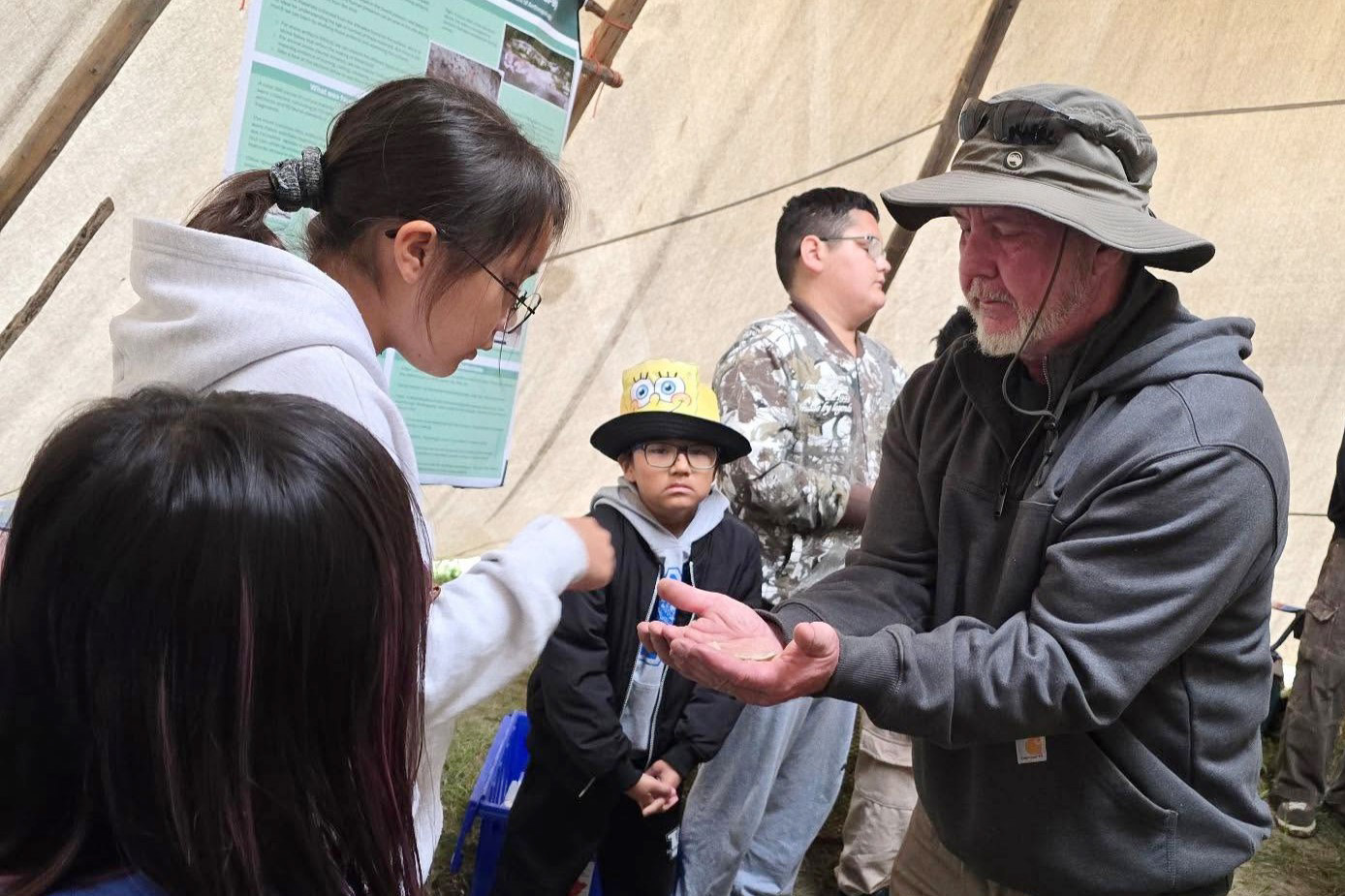
Image Caption
Local Journalism Initiative Reporter
Windspeaker.com
Archaeological evidence from an ancient North Saskatchewan River crossing is helping researchers trace thousands of years of Indigenous land use while surrounding communities seek protection for a landscape at the centre of a logging dispute.
Âsowanânihk, meaning “A Place to Cross,” lies near Crutwell, west of Prince Albert, Sask. Archaeologists are examining evidence of people returning over thousands of years.
Environmental archaeologist Glenn Stuart says the evidence shows repeated occupation but does not establish that people lived at the site permanently.
The University of Saskatchewan associate professor outlined the findings in written responses to Windspeaker’s questions. Project updates on June fieldwork and news reports published in September provide more information about the ongoing research and efforts to protect the surrounding environment.
Reading the layers of a crossing place
“Âsowanânihk is the oldest radiocarbon dated archaeological site in Saskatchewan, indicating that the earliest occupation of the site was around 10,650 years ago,” Stuart tells Windspeaker.
He described a second radiocarbon date of about 9,200 years ago. Together, the dates indicate that a stable surface formed after ice from the last Ice Age melted and the resulting water drained away allowing plants, animals and people to inhabit the area.
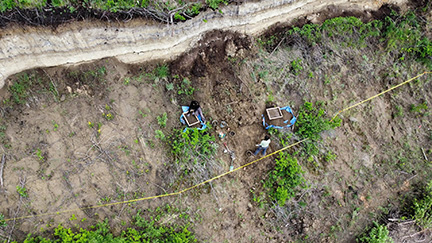
That ancient soil surface, known as a palaeosol, lies roughly two metres below the current ground surface. A dark band contains a red stain likely associated with a fire or series of fires. Stone-tool production debris and bones bearing evidence of butchering occur at several levels, indicating repeated returns.
“We do not, however, have any evidence indicating how long they may have stayed at the site, how frequently they returned, or even if it was the same group of people (or direct descendants of those people),” he wrote.
Stuart said the site does not show anything unusual about how people moved between locations. He nevertheless found its repeated use over thousands of years intriguing, while stressing that the evidence does not establish permanent occupation.
The exposed bank allows researchers to observe buried layers without first excavating down through the entire sequence, Stuart explained. Sediment analysis could also help reconstruct past environments and the resources available to people using the crossing.
The project’s educational material illustrates how layers accumulated at the site: people made a hearth, flooding deposited sediment above it, soil developed and bison remains were later deposited in a younger layer. The hearth’s position beneath bison remains indicated that the fire had been built before those remains were deposited.
Stuart emphasized that First Nations people lived successfully in what is now Saskatchewan for thousands of years before Europeans arrived. He cautioned, however, that the archaeological evidence does not establish a direct ancestral line of the site to a particular contemporary community.
“Archaeologically, we cannot say that First Nations people living in the area today are direct descendants of people who left belongings behind at Âsowanânihk, but we can certainly say they are related,” he wrote.
In February 2025, nearby Sturgeon Lake First Nation announced the archaeological findings at Âsowanânihk and called for support to protect the site and continue research. The announcement also noted that oral histories have long described the area as an important cultural and trade hub.
Fieldwork broadens the research
A project update by University of Saskatchewan master’s student Isabella Palamaruk describes about 250 to 300 young people visiting the site from June 1 to June 5 this year. Participants recovered animal remains and stone-tool materials, including three complete projectile points.
Eleven-year-old Piper Baldhead from Beardy’s and Okemasis Cree Nation found one. Nick Charpentier, representing Métis Nation–Saskatchewan, and Palamaruk found the others. Palamaruk wrote that the discoveries provide more information about later occupations, helping researchers investigate when people returned after the earliest activity.
Dave Rondeau, a local researcher and historian who identified Âsowanânihk, told EFN Media in June that community members had also identified a second nearby site after learning what to recognize in the field. He described continuing work to establish the extent of Âsowanânihk itself.
The research has also reached public audiences. A Sept. 24 Prince Albert Daily Herald report described Stuart and Rondeau presenting at the Prince Albert Historical Museum during Culture Days. Stuart emphasized repeated occupation and the value of bringing Indigenous and scientific knowledge together.
“It’s been occupied repeatedly over thousands and thousands of years,” he told the newspaper.
Protecting the history still being studied
On Sept. 4, members of First Nations and Crutwell Métis Local 66 joined a Prince Albert protest opposing logging in the surrounding heritage landscape, paNOW reported.
Organizer Candice Campbell said possible tipi rings had been identified in July and argued that researchers needed more time to investigate newly recognized places. She also described the area’s continuing importance for gathering medicines, berries and roots.
“The archeologists haven’t had time to get in there and study these sites yet, because we’re only just finding them. We need more time,” Campbell told paNOW.
Her account identifies potential discoveries requiring assessment.
The province has previously described its approach as balancing forest health with economic, ecological and social considerations. In a March 2025 statement, Saskatchewan’s Ministry of Environment said it was considering a request for a three-year logging moratorium in three specific areas. The ministry said it welcomed traditional knowledge and local information about potential impacts and affirmed its duty to consult First Nations and Métis communities.
For Sturgeon Lake First Nation, the significance extends beyond archaeological measurements. In the February 2025 announcement, Chief Christine Longjohn connected the discovery with reclaiming Indigenous history and recognition.
“We are not just reclaiming history — we are reclaiming our rightful place in it,” she said.
Elders and knowledge keepers from Treaty 6 First Nations and Métis Western Region 2 work alongside scholars to make decisions about research, site protection and educational resources, according to the Âsowanânihk Council’s website.
Kiara Palmer, a Beardy’s and Okemasis Cree Nation member and University of Saskatchewan archaeology student, told EFN Media that her work includes helping young visitors make connections with the land, history and Indigenous ingenuity. She said she hoped to develop further educational opportunities.
“Youth are our future, but they are also the here and now,” Palmer said.
Stuart similarly sees school visits as an opportunity to encourage the next generation of researchers.
“It is our hope that maybe some of these young people become interested enough that they decide to become archaeologists themselves,” he wrote.